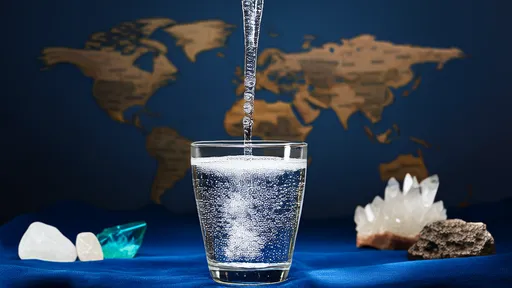
In a dimly lit tasting room in Reykjavik, a dozen participants swirl glasses of crystal-clear liquid beneath their noses, their brows furrowed in concentration. This isn’t some avant-garde wine appreciation society—it’s the cutting edge of water sommelier culture. Across three continents, a growing movement of hydro-oenophiles (water connoisseurs) are proving that H₂O carries as much geographical signature as any grand cru vineyard.
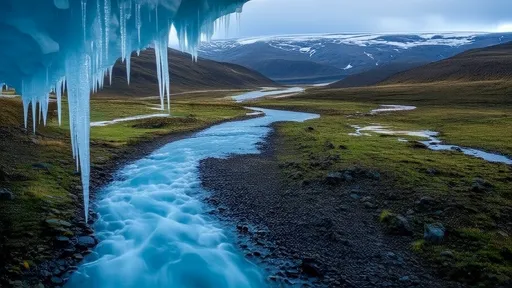
The concept seems absurd until you taste them side by side. Volcanic Icelandic water delivers a sulfurous whisper of geothermal drama, while Norwegian glacial melt coats the tongue with a velvety mineral silence. The chalk-filtered waters of England’s Cotswolds leave a flinty aftertaste reminiscent of struck matches, a stark contrast to the creamy texture of water filtered through Slovenian dolomite caves.
At London’s prestigious Water Library, head sommelier Richard Kensington orchestrates monthly blind tastings where patrons pay £120 to guess water origins. "People assume all water tastes neutral," he says, swirling a glass of Tasmanian rainwater that carries distinct eucalyptus notes from the island’s gum trees. "But terrain imprints itself on water just as climate shapes wine. The difference is we’ve never been taught to pay attention."
Science confirms what connoisseurs claim. Mass spectrometry reveals how Scottish Highland water contains microscopic particles of heather pollen and granite, while artesian wells in New Zealand’s Southern Alps carry dissolved gold in concentrations detectable by sensitive palates. A 2023 Oxford study found trained tasters could identify water sources with 89% accuracy based solely on mouthfeel and flavor nuances.
The most coveted waters develop cult followings. Japan’s Toyama Kurobe water, filtered through 3,000-meter snowpack, sells for ¥8,000 per liter in Tokyo specialty stores. Its fans describe a "melting snow" texture and faint umami character from underground microbial activity. Meanwhile, Silicon Valley tech executives have sparked demand for oxygenated Bhutanese glacial water shipped in vacuum-sealed titanium flasks.
Critics dismiss the trend as conspicuous consumption, but devotees argue they’re preserving disappearing hydrological heritage. As climate change alters precipitation patterns and pollution infiltrates aquifers, some waters already taste different than they did a decade ago. The 2022 edition of Water Atlas—a catalog of 800 global water profiles—notes that French Evian now carries subtle tannic notes absent in vintage 1990s bottles, likely due to shifting alpine mineral flows.
Back in Reykjavik, Icelandic water sommelier Eva Þorsteinsdóttir watches as a French journalist correctly identifies a Sardinian water by its distinctive iron tang. "This isn’t about snobbery," she says, pouring a glass that crackles with natural carbonation from underground lava fields. "When you learn to taste water, you’re drinking the story of mountains, of rainfalls, of centuries of filtration through stone. It’s the oldest language on Earth."
The next frontier? Professional water pairing dinners where courses are matched with waters as carefully as wines. At Copenhagen’s Alchemist restaurant, a smoked eel dish comes with Faroese water high in magnesium to enhance umami perception, while dessert is served with soft Finnish water low in minerals to prevent bitterness clashes. As one patron remarked, "Suddenly, tap water seems like turning down a symphony to listen to your refrigerator hum."
Perhaps the most surprising development comes from California’s Napa Valley, where winemakers now hire water sommeliers to ensure dilution (common during drought years) uses water that complements their terroir. As veteran vintner Marc Duvall observes, "If you’re going to add 15% Sierra snowmelt to your cabernet, it damn well better taste like the right mountain."
From Tokyo tasting salons to hydrological conservation efforts in the Swiss Alps, the water appreciation movement challenges our most basic assumptions about taste. What began as a quirky parlor game has evolved into a serious study of how landscape becomes liquid—one sip at a time. As Kensington notes while watching a novice taster suddenly discern the iron signature of Welsh spring water, "The real revelation isn’t that waters taste different, but that we forgot how to notice."
By /Jul 16, 2025
By /Jul 16, 2025
By /Jul 16, 2025

By /Jul 16, 2025

By /Jul 16, 2025
By /Jul 16, 2025

By /Jul 16, 2025
By /Jul 16, 2025
By /Jul 16, 2025

By /Jul 16, 2025
By /Jul 16, 2025
By /Jul 16, 2025
By /Jul 16, 2025
By /Jul 16, 2025

By /Jul 16, 2025

By /Jul 16, 2025
By /Jul 16, 2025

By /Jul 16, 2025
By /Jul 16, 2025

By /Jul 16, 2025
