Snow Wall Highway Opening: A Guide to Walking in Tateyama Kurobe, Japan"

Jul 16, 2025 By

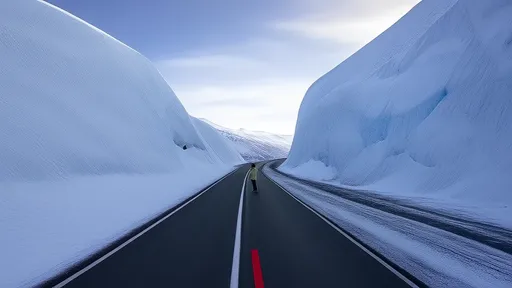
The Snow Wall of Japan's Tateyama Kurobe Alpine Route stands as one of Asia's most breathtaking natural spectacles. Each spring, as winter reluctantly loosens its grip on the Northern Japan Alps, road crews perform an extraordinary feat of engineering - carving a 500-meter-high corridor through snowdrifts that tower like frozen tsunamis. This ephemeral passage, open only from mid-April through late November, transforms into a pilgrimage route for nature lovers and adventure seekers alike.

The Birth of a Seasonal Wonder

What makes this phenomenon extraordinary isn't merely its scale, but the precision of its annual reappearance. The snow walls form naturally as Siberian winds dump nearly 20 meters of powder on this mountain pass. When the Tateyama Kurobe Alpine Route opens its snow corridor section between mid-April and June, visitors can walk between these shimmering white cliffs that gradually melt from 20-meter giants down to shoulder height before vanishing completely by summer.

Early morning arrivals are rewarded with crystalline light refracting through ice crystals, while late afternoons paint the walls in alpenglow. The experience engages all senses - the crunch of compacted snow underfoot, the mineral scent of melting ice, and the startling silence that exists only in snow-muffled landscapes. Photographers particularly prize the weeks when the corridor's floor remains blanketed in snow, creating infinite white reflections.

Navigating the Alpine Route

Reaching the snow walls requires mastering Japan's most spectacular mountain transit system. The full Tateyama Kurobe Alpine Route spans 37 kilometers across Toyama and Nagano prefectures, involving seven different transportation methods including cable cars, trolley buses, and Japan's highest-elevation ropeway. Most visitors access the snow corridor from the Toyama side, taking the Tateyama Cable Car from Dentetsu-Toyama Station up to Bijodaira, then transferring to electric buses climbing to Murodo Station at 2,450 meters elevation.

The snow wall walkway extends about 500 meters near Murodo Station, with the most dramatic section nicknamed "Yuki-no-Otani" (Snow Valley). While the path is well-maintained, April visitors should prepare for subzero temperatures and possible snowfall even as cherry blossoms bloom in Tokyo. By late May, the walls shrink considerably but the surrounding alpine meadows begin their brief, colorful awakening.

Beyond the Snow Corridor

While the snow walls rightfully claim attention, the Alpine Route offers otherworldly landscapes throughout its operating season. The Kurobe Dam, Japan's tallest at 186 meters, unleashes thunderous water discharges from late June through October. The Midagahara wetlands explode with alpine flowers in July, while autumn paints the highlands in fiery hues by October. Even the infrastructure becomes part of the experience - the Tateyama Tunnel's switchback descent offers panoramic views that rival Switzerland's best mountain railways.

Accommodations range from Murodo's basic mountain lodge to luxury hot spring resorts at nearby Unazuki. Food options along the route showcase regional specialties like Toyama Bay sushi and hearty hoto noodles. Savvy travelers time their descent to enjoy sunset from the moving cable car, when the entire Northern Alps glow like embers.

Practical Considerations

Timing proves crucial for experiencing the snow walls at their most dramatic. Early birds in April face colder temperatures but witness the corridor at maximum height, while May visitors enjoy milder conditions with walls still towering overhead. By June's opening, the snow recedes to more modest but still impressive levels. Regardless of timing, morning arrivals beat both crowds and potential afternoon fog.

The route's popularity means advance planning is essential. Online reservations for transportation segments open months ahead, with peak dates selling out quickly. Proper footwear with traction is mandatory - the compacted snow path can be slippery even on sunny days. At high altitude, sunscreen and sunglasses prove necessary even in cold weather due to intense UV reflection off the snow.

For those seeking solitude, weekdays outside Golden Week (late April to early May) offer relatively quieter experiences. Photography enthusiasts should consider polarized filters to manage the snow's glare, while all visitors should carry extra camera batteries - cold temperatures drain power unexpectedly fast.

A Journey Through Seasons

The Tateyama Kurobe Alpine Route represents more than just a scenic drive - it's a vertical journey through Japan's seasonal soul. From the snow corridor's winter majesty to autumn's fiery finale, this traverse showcases nature's fleeting artistry. The snow walls in particular embody the Japanese aesthetic of mono no aware - the poignant beauty of impermanence. Each year's corridor melts away uniquely, ensuring no two visits are ever the same.

Those who make the pilgrimage return with more than photographs. They carry memories of walking between frozen waves, of breathing air so crisp it sparkles in the lungs, of standing humbled before mountains that make human achievements seem both grand and insignificant. In a country renowned for cherry blossoms and maple leaves, the snow walls of Tateyama offer a different, more primal seasonal spectacle - one written not in petals or leaves, but in ice and altitude and awe.
Recommend Posts
Travel

Flavor Geography Blind Test: Mineral Water Origin Guessing Challenge

By /Jul 16, 2025

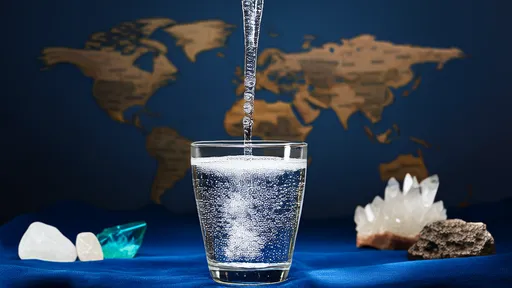
In a dimly lit tasting room in Reykjavik, a dozen participants swirl glasses of crystal-clear liquid beneath their noses, their brows furrowed in concentration. This isn’t some avant-garde wine appreciation society—it’s the cutting edge of water sommelier culture. Across three continents, a growing movement of hydro-oenophiles (water connoisseurs) are proving that H₂O carries as much geographical signature as any grand cru vineyard.
Travel

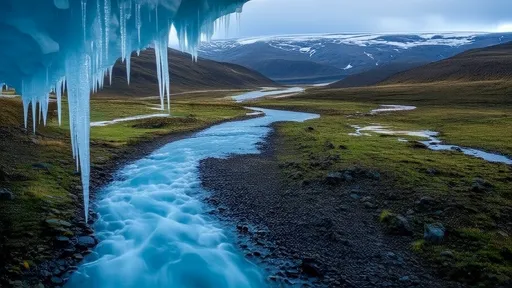
Glacial Meltwater Tracking: A Seven-Day Drift from Ice Tongue to River

By /Jul 16, 2025

The glacial tongue glistened under the midnight sun, its fractured edges weeping crystalline meltwater into the milky turquoise stream below. Our team of hydrologists and adventurers tightened the straps on our bright orange drysuits, exchanging nervous grins as we pushed the inflatable raft into the icy current. This seven-day journey would trace the liquid pulse of the climate crisis – from the crumbling face of the Sólheimajökull glacier to the raging Jökulsá river, where meltwater becomes myth.
Travel

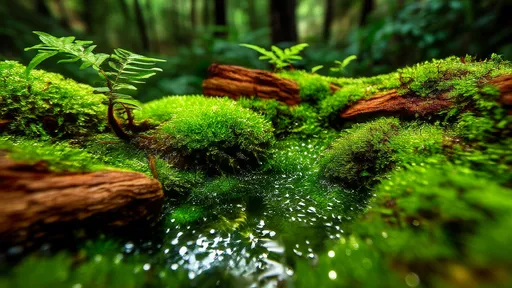
Moss Micro-Journey: The Green Velvet Map on Rainforest Stone Walls

By /Jul 16, 2025

Deep in the heart of the rainforest, where sunlight filters through a dense canopy in fractured beams, an entire universe thrives unnoticed. On the moss-covered stone walls, miniature jungles unfold—a labyrinth of emerald tendrils and velvety cushions that form intricate living maps. These are not mere stains of green but thriving ecosystems, each tuft a microcosm of survival and symbiosis. To kneel before these stones is to peer into a world where time moves differently, where the slow pulse of growth and decay writes stories in chlorophyll.
Travel

A Tour of Typhoon-Resistant Architecture: From Fujian Tulou to Okinawa Ishigaki Houses

By /Jul 16, 2025

The relentless fury of typhoons has shaped architectural ingenuity across Asia’s coastal and mountainous regions, giving rise to structures that defy nature’s wrath. From the earthen fortresses of Fujian’s tulou to the low-slung stone houses of Okinawa’s Ishigaki Island, these buildings are not merely shelters but testaments to human resilience. Their designs, honed over centuries, reveal a profound understanding of wind dynamics, material science, and communal living—principles that modern engineers still study today.
Travel

Drought Wisdom Studies: Exploring Morocco's Well-Cistern Water Supply System"

By /Jul 16, 2025

In the heart of Morocco's arid landscapes, where rainfall is scarce and water is a precious commodity, ancient wisdom has given rise to an ingenious solution: the khettara system. These underground water channels, often referred to as "qanats" in other parts of the world, have sustained communities for centuries. A journey into the depths of this traditional hydro-engineering marvel reveals not just a method of water distribution, but a profound understanding of living in harmony with a harsh environment.
Travel

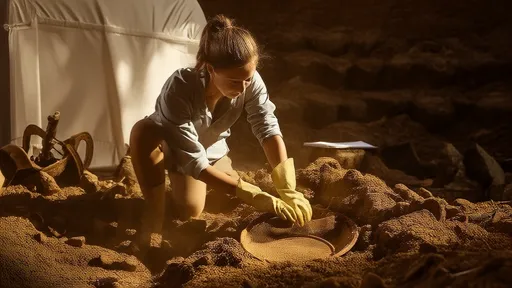
Archaeological Volunteer Diary: Historical Fragments in the Sieved Soil of the Site

By /Jul 16, 2025

The morning mist still clung to the valley as our team of archaeology volunteers gathered at the dig site, our breath visible in the crisp autumn air. What began as routine soil sifting would soon reveal fragments of lives long forgotten—each speck of pottery, each discolored stone whispering secrets from centuries past. This is the quiet magic of archaeological fieldwork, where history emerges not in grand revelations but through patient accumulation of mundane details.
Travel

Blind Experience Camp: Urban Stroll Guided by Smell and Hearing

By /Jul 16, 2025

In the heart of the bustling city, a unique sensory adventure unfolds as participants of the "Blind Walk Experience Camp" navigate urban landscapes guided solely by smell and sound. This innovative program challenges conventional ways of interacting with our surroundings, offering a profound perspective on accessibility and perception.
Travel

Invasive Plant Removal Camp: Eco-Restoration Workers' Vacation

By /Jul 16, 2025

On a misty morning in the Pacific Northwest, thirty volunteers wade through waist-high thickets of Himalayan blackberry with loppers and gloves. Their laughter mingled with the sound of snipping stems as coffee steamed in thermoses nearby. This wasn't some extreme gardening club - it was the latest "Invasive Species Bootcamp" attracting ecology-minded vacationers across North America.
Travel

Edible Wild Plants Course: Field Identification and Culinary Practice

By /Jul 16, 2025

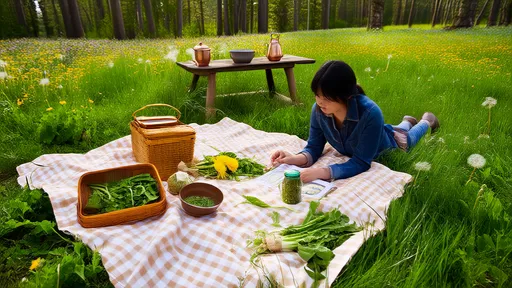
In an era where processed foods dominate our diets, a quiet revolution is taking place as more people rediscover the nutritional and culinary treasures growing right beneath our feet. Foraging for edible wild plants isn't just a survival skill - it's becoming a way to reconnect with nature while adding extraordinary flavors and nutrients to our meals. Across meadows, forests, and even urban parks, an astonishing variety of wild greens, flowers, and roots await those who know how to identify them safely.
Travel

Desert Seed Bank: The Life Ark of Arid Regions

By /Jul 16, 2025

In the heart of some of the world's most arid landscapes, a quiet revolution is taking place. Seed banks dedicated to preserving the genetic diversity of desert plants are emerging as modern-day arks, safeguarding life against the twin threats of climate change and human encroachment. These specialized repositories are not merely storage facilities but active research centers where scientists work tirelessly to understand and protect species that thrive in extreme conditions.
Travel

Astronomical Observatory Night: Telescope Maintenance and Sky Records

By /Jul 16, 2025

The quiet hum of the night envelops the observatory as the assistant astronomer adjusts the focus knob on the refractor telescope. A faint click echoes through the dome as the mechanism locks into place. Outside, the sky is a tapestry of stars, each one a distant sun waiting to be studied. Nights like these are both a privilege and a responsibility for those who tend to humanity’s windows to the cosmos.
Travel

Snow Wall Highway Opening: A Guide to Walking in Tateyama Kurobe, Japan"

By /Jul 16, 2025

The Snow Wall of Japan's Tateyama Kurobe Alpine Route stands as one of Asia's most breathtaking natural spectacles. Each spring, as winter reluctantly loosens its grip on the Northern Japan Alps, road crews perform an extraordinary feat of engineering - carving a 500-meter-high corridor through snowdrifts that tower like frozen tsunamis. This ephemeral passage, open only from mid-April through late November, transforms into a pilgrimage route for nature lovers and adventure seekers alike.
Travel

Morning Practice of Milking and Shearing as a Temporary Ranch Hand

By /Jul 16, 2025

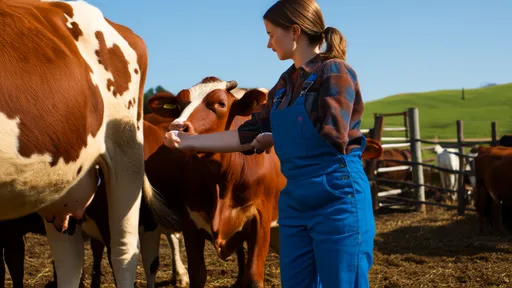
The predawn hours on a working dairy or sheep station hold a particular magic that few outside the agricultural world ever witness. As most of the world still slumbers beneath star-flecked skies, temporary workers—those unsung heroes of predawn shifts—are already moving through the rhythmic rituals of milking and shearing. There’s a quiet spirituality to these tasks, a meditative quality that transforms manual labor into something resembling morning devotion.
Travel

Summer Retreat: Mediterranean Underground Cave Communities

By /Jul 16, 2025

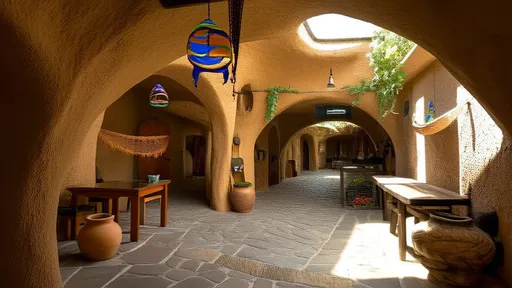
In the sun-baked landscapes of the Mediterranean, where summer temperatures often soar to unbearable heights, a unique architectural phenomenon offers respite from the heat. Underground cave communities, carved into the soft rock of hillsides and valleys, have served as natural refrigerators for centuries. These subterranean dwellings, known as "cooling cellar cities," are not just relics of the past but thriving habitats that continue to shelter residents from the scorching sun.
Travel

Silent Train Review: Track Travel with Decibel Levels Below 35

By /Jul 16, 2025

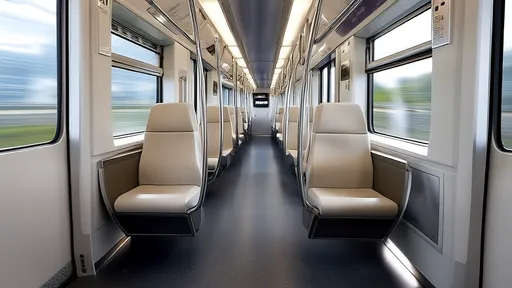
The hum of wheels against tracks, the rhythmic clatter of carriages, the occasional screech of brakes—these are the sounds most travelers associate with train journeys. But what if rail travel could be nearly silent? Recent advancements in rail technology have ushered in a new era of ultra-quiet trains, with some models registering noise levels below 35 decibels—comparable to a whisper in a library. These "silent trains" are redefining comfort and sustainability in public transportation.
Travel

Digital Nomads Police Station: Free Office Space in Municipal Facilities

By /Jul 16, 2025

The concept of digital nomadism has taken the world by storm, reshaping how we perceive work and travel. In response to this growing trend, cities around the globe are adapting by creating spaces that cater to the needs of these location-independent professionals. One such innovative initiative is the Digital Nomad Police Station, a municipal space offering free co-working facilities to remote workers. This forward-thinking approach not only supports the digital nomad community but also revitalizes underutilized urban areas.
Travel

Tactile Museum: A Collection of Textiles to Touch

By /Jul 16, 2025

In a world where museums often enforce strict "do not touch" policies, the emergence of tactile museums offers a refreshing and inclusive alternative. Among these, textile collections that encourage physical interaction stand out as a unique bridge between art, history, and sensory experience. These spaces challenge traditional museum norms by inviting visitors to engage with fabrics, weaves, and embroideries not just visually but through the often-overlooked sense of touch. The result is a deeply personal connection to cultural heritage, one that resonates particularly with visually impaired audiences but enriches all who participate.
Travel

Dark Dining Map: A Feast of Amplified Taste in the Darkness"

By /Jul 16, 2025

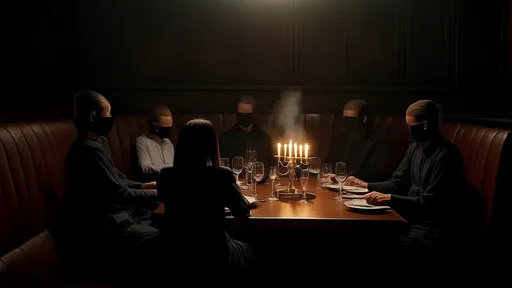
In a world where dining experiences often prioritize visual presentation, a growing movement challenges guests to engage their other senses by removing sight entirely. Dark dining restaurants have emerged as avant-garde establishments where patrons eat in complete darkness, served by visually impaired waitstaff who navigate the pitch-black environment with ease. These unique venues transform meals into multisensory adventures, amplifying taste, smell, and texture while stripping away the visual biases that shape our relationship with food.
Travel

Fog Navigation Techniques: Observation Points of San Francisco's Golden Gate Bridge

By /Jul 16, 2025

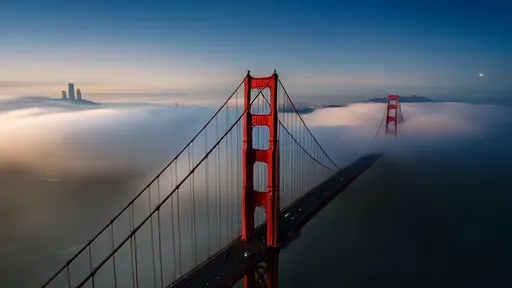
The Golden Gate Bridge, an iconic symbol of San Francisco, presents a unique challenge for navigators and visitors alike when the infamous Bay Area fog rolls in. The thick, swirling mists that frequently envelop the bridge create an otherworldly atmosphere, reducing visibility to near zero and transforming the steel structure into a ghostly silhouette. For those attempting to navigate or observe the bridge under these conditions, specialized techniques and local knowledge become essential.
Travel

Travel Photographer's Notebook: Secrets to Exchanging Accommodation for Your Lens

By /Jul 16, 2025

The concept of trading photography skills for accommodation has quietly revolutionized the way many travel photographers explore the world. What began as an informal barter system among creative nomads has blossomed into a legitimate movement, with skilled lensmen and women discovering they can fund their wanderlust through the currency of compelling images. This symbiotic relationship between hosts and photographers creates value for both parties - one gains professional-quality visual content, the other secures comfortable lodgings without draining their travel budget.