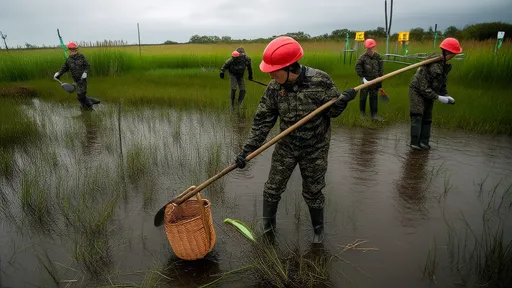
On a misty morning in the Pacific Northwest, thirty volunteers wade through waist-high thickets of Himalayan blackberry with loppers and gloves. Their laughter mingled with the sound of snipping stems as coffee steamed in thermoses nearby. This wasn't some extreme gardening club - it was the latest "Invasive Species Bootcamp" attracting ecology-minded vacationers across North America.
The concept seems counterintuitive at first: paying to do hard labor on your days off. But these week-long working holidays where participants remove non-native plants have waitlists stretching into 2025. "It's like a yoga retreat meets Habitat for Humanity," explains marine biologist-turned-eco-tour operator Rafael Mendez, whose company TerraRestore has hosted over 200 such camps. "People crave tangible environmental action after years of depressing climate headlines."
The psychology behind this trend reveals deeper cultural shifts. A 2023 Cornell University study found that 68% of participants in ecological volunteer vacations reported higher life satisfaction scores than traditional resort-goers. There's something primal about ripping out invasive roots with bare hands that office jobs can't replicate. "You see immediate results - one day it's a monoculture of kudzu, next week native saplings get sunlight," says repeat attendee Juniper Cole, who credits these trips with curing her insomnia.
Modern conservation science fuels the movement's growth. Gone are the days of haphazardly yanking weeds. Today's programs incorporate species identification workshops, soil microbiome restoration techniques, and even drone mapping of cleared areas. At a Maine camp last August, volunteers used biodegradable dyes to mark where they'd removed oriental bittersweet, creating stunning aerial art visible to passing satellites.
The social dynamics prove as fascinating as the ecological work. Nightly campfire circles become impromptu therapy sessions where corporate lawyers bond with college students over shared blisters. Veteran restorationists tell stories about battling "zombie plants" - invasive species that regenerate from tiny root fragments. A peculiar camaraderie forms when collectively fighting a literal common enemy.
Critics initially dismissed these programs as eco-tourism gimmicks, but the numbers tell another story. The California Native Plant Society estimates that volunteer clearing camps accounted for 17% of all invasive plant removal on public lands last year. Their secret weapon? Follow-through. Unlike one-day corporate volunteer events, participants often return annually to monitor "their" sites, creating long-term stewardship rarely achieved through government programs.
As climate change accelerates species migration, these grassroots efforts may preview future conservation models. Some camps now train attendees to identify new invasives moving north with warming temperatures. Others partner with indigenous communities to incorporate traditional ecological knowledge. What began as niche getaways are evolving into citizen science hubs.
The movement isn't without controversy. Debate simmers about whether removing invasives sometimes does more harm than good in rapidly changing ecosystems. Purists clash with pragmatists over whether certain non-natives should be tolerated if they provide erosion control or pollinator support. These tensions surface during evening discussion groups, proving even environmentalism has its gray areas.
For urban dwellers especially, the visceral experience leaves lasting impacts. Software engineer David Wu recalls the moment his group uncovered a long-buried creek after clearing English ivy in Portland: "We literally revealed a lost waterway with our hands. That beats any team-building exercise invented by HR." His company now sponsors employee trips after seeing productivity spikes among returning staff.
Perhaps the most surprising development is the camps' economic ripple effect. Nearby towns see boosts as visitors stock up on supplies and celebrate with post-camp meals. Local nurseries report soaring sales of native plants for volunteers to take home. Even the gear industry is responding - REI recently launched a "Restoration Ready" line featuring knee pads designed for extended weeding sessions.
As dusk falls at a Texas camp battling giant reed grass, the exhausted but exhilarated group gathers around a table piled with maps and native wildflower seeds. There's talk of next year's trip, of bringing family members, of the owl spotted nesting in last season's cleared thicket. In an age of abstract environmental crises, they've found something rare: hope you can pull out of the ground with your own two hands.

By /Jul 16, 2025

By /Jul 16, 2025
By /Jul 16, 2025

By /Jul 16, 2025

By /Jul 16, 2025

By /Jul 16, 2025

By /Jul 16, 2025
By /Jul 16, 2025
By /Jul 16, 2025

By /Jul 16, 2025

By /Jul 16, 2025

By /Jul 16, 2025
By /Jul 16, 2025

By /Jul 16, 2025

By /Jul 16, 2025

By /Jul 16, 2025

By /Jul 16, 2025

By /Jul 16, 2025

By /Jul 16, 2025

By /Jul 16, 2025
